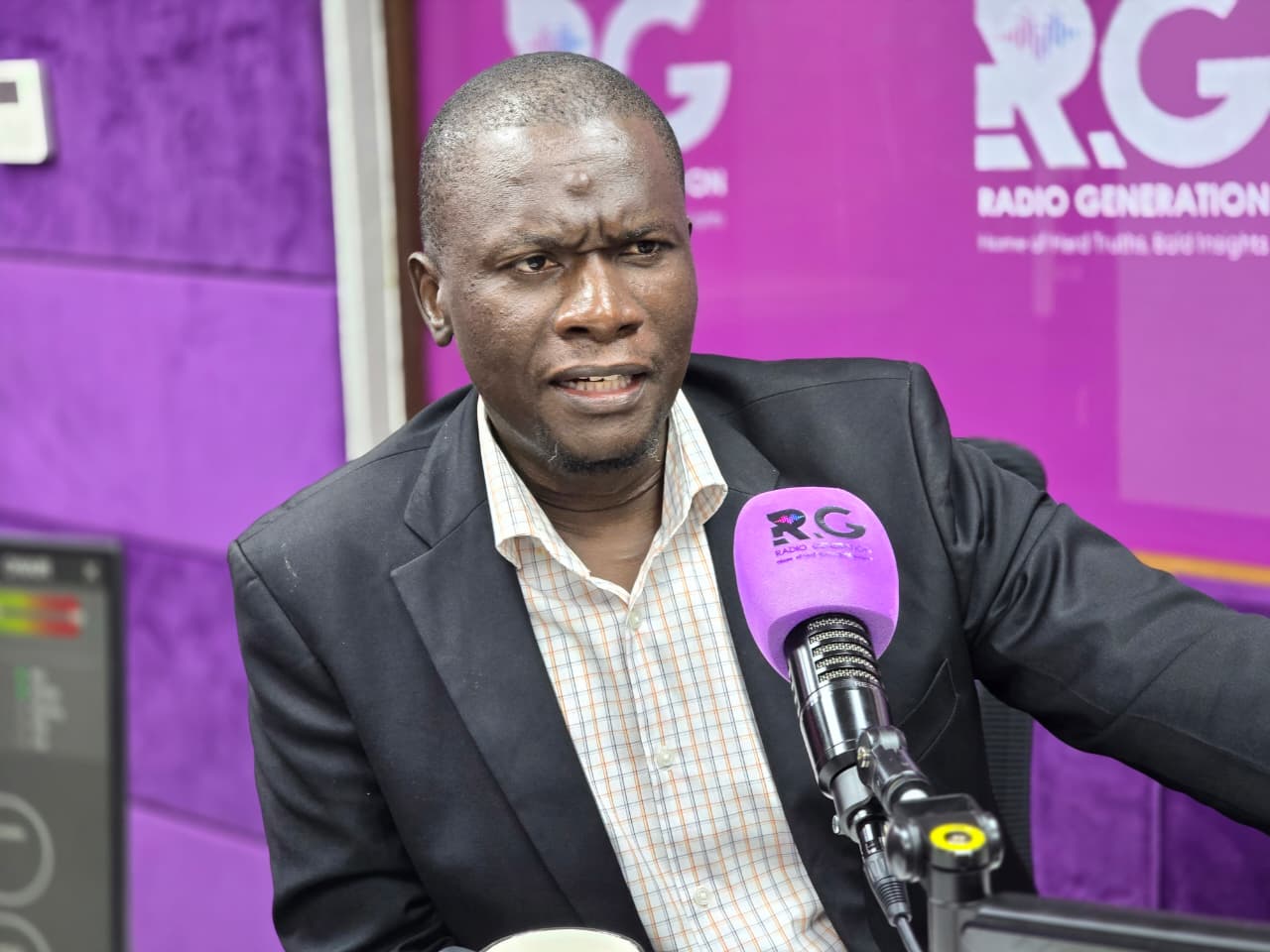
ELIM Capital Chief Executive Odhiambo Ramogi says Kenya’s economic challenges are rooted not only in policy choices but in leadership failures, exclusion and corruption.
Speaking during a Radio Generation interview on Tuesday, Ramogi said transforming Kenya’s economy would require constitutionalism, patriotism and accountable leadership rather than new slogans or personalities.
“We will need Kenyans to be patriotic,” he said, arguing that once citizens understand patriotism, “then we will know the leaders we need to get rid of”.
Reflecting on Kenya’s past Presidents, Ramogi described former President Mwai Kibaki as a leader who delivered measurable economic gains, even if his legacy remains contested.
“He got an economy that was run down,” Ramogi said, noting that international isolation during the late Moi era had starved Kenya of grants and loans.
According to Ramogi, Kibaki’s administration benefited from improved global conditions and sound domestic policies.
“We started seeing change in terms of some very good development partnerships, some very good policies,” he said, highlighting free primary education as a defining achievement. “That generation of free education, are very informed, very well educated and very exposed.”
He also credited Kibaki with prudent economic management. “Capital was available,” Ramogi said, recalling a period when banks struggled to lend surplus liquidity.
“Banks didn’t know what to do with that money, and in turn, the economy responded.” He noted that by 2006 and 2007, Kenya’s economy had recorded growth of more than seven per cent.
However, Ramogi cautioned against viewing progress in isolation. “We must see governments as a continuum,” he said, arguing that foundations laid by earlier administrations also mattered.
He pointed to President Moi’s expansion of education infrastructure, saying, “It’s in his time that many schools were built, university education got expanded.”
The economist said these investments later enabled Kenyans to work abroad and remit money home. “People would not have been able to do what they’ve done by moving out, if a foundation of education did not exist,” he said.
On President Jomo Kenyatta, Ramogi argued that his key contribution was consolidating African control of government after independence. “The African had taken over literally all the major decision-making processes within government and parliament,” he said.
Despite Kibaki’s economic successes, Ramogi said his leadership failed on inclusion. “There was economic growth, but then the people benefiting from that economic growth, the rest of Kenyans felt were only one community,” he said.
He blamed skewed appointments and resource allocation for fuelling resentment, arguing this helped trigger the 2007 post-election violence.
“In economics, after production comes distribution,” Ramogi said. “Who gets what, where, how, when.” He said Kibaki failed to project himself as the representative of every Kenyan.
Turning to China-funded infrastructure, Ramogi said Kibaki’s pivot to China was driven by corruption among local contractors.
“They were being paid to do things which they never do,” he said. While Chinese firms delivered projects, he said the model undermined Kenya’s economy.
“If you gave a Chinese a contract of Sh100 million, what ends up circulating in Kenya is not more than a fifth of that.”
He warned that exporting capital limited the multiplier effect. “You do not have that when you take the majority of your construction money to a foreign country,” he said.
Ramogi was most critical of former president Uhuru Kenyatta’s administration, describing it as the most unsuccessful.
He said Kenyatta inherited all the right ingredients, including a new constitution, devolution and strong public support, but failed to deliver.
“He borrowed a lot so that he can do a lot in 10 years, which he didn’t do,” Ramogi said, criticising heavy borrowing for projects such as the standard gauge railway. “It cannot repay itself, even in 20 years.”
He also accused Kenyatta of presiding over rampant corruption. “He admitted publicly that we lose Sh2 billion daily,” Ramogi said, adding that such losses have since grown.
Ramogi rejected claims of presidential helplessness. “You do not tell me you are helpless when you have the instruments of security under your leadership,” he said.
According to Ramogi, leadership failure and lack of moral authority allowed corruption to flourish. “He had the opportunity to say no,” he said. “We need to take this country forward.”































Comments
Sign in with Google to comment, reply, and like comments.
Continue with Google